Call a washer technician when a problem involves live electrical parts, internal wiring, a persistent leak, a burning smell, or a washer that still fails after basic checks. You can safely handle simple steps such as checking the load, cleaning an accessible filter, or confirming that the water valves are open. Washer repair vs DIY is mainly a question of whether the task stays outside the machine's energized, sealed, or load-bearing components. This guide explains which checks are reasonable, what warning signs mean, and how we approach professional laundry appliance service across Florida. If you live in Florida, the state's heat and humidity also make a small leak worth addressing promptly.
Washer repair vs. DIY: where the safe line falls
Washer repair vs DIY in Florida means choosing between low-risk external checks you can do yourself and repairs that expose you to electrical, water, or mechanical hazards. The safe line is clear: troubleshoot settings, supply, and removable user-serviceable parts; call us for internal faults or any sign of damage.
Washer repair vs DIY is a decision about risk and diagnosis, not just whether a repair video looks easy. A washer combines household voltage, pressurized water, a heavy rotating drum, and-in many models-electronic controls that can retain charge after power is disconnected. A loose hose connection is not the same repair as a leaking tub seal.
For a machine that will not start, begin with the display, door or lid latch, breaker, and water supply. Our Washer Repair in Florida team handles the next step when those simple checks do not explain the symptom. We inspect the failure, identify the cause, and test the washer after the repair.
Before opening anything, check the owner's manual and warranty terms. Some manufacturers require approved service for covered repairs, and removing a panel can complicate a warranty claim. The manual also identifies which filters and cleanout doors are designed for homeowner access.
Which washing machine problems are safe to troubleshoot?
In Florida, washing machine problems are safe to troubleshoot when they involve visible settings, an overloaded drum, an accessible hose, or a removable part your manual identifies for routine cleaning. Keep the washer plugged in only for normal controls; unplug it before cleaning or touching a removable component.
Start with the least invasive checks. Pause a cycle, redistribute a tangled load, and confirm that a high-efficiency model is using HE detergent. A load that is too heavy or uneven can trigger a balance error, especially during the high-speed spin phase, which may reach about 1,000 to 1,200 revolutions per minute depending on the model.
- Washer will not start: Check that the door or lid is fully closed, the control lock is off, and the outlet or breaker has power.
- No water enters: Confirm both supply valves are open and look for a kink in the visible fill hoses.
- Slow draining: Clean a user-accessible pump filter only as the manual directs, with towels and a shallow pan ready for trapped water.
- Excessive vibration: Remove a few items, spread the load evenly, and check whether the washer rocks on the floor.
- Odor or residue: Run the manufacturer's tub-clean cycle; many manuals recommend it about once a month, especially with frequent cold washes.
Do not pull out a stacked unit or reach behind a heavy washer alone just to inspect a hose. If you are checking a visible connection, turn off the water first. In older homes and condos around Miami, cramped laundry closets can also make a seemingly simple access check awkward; Washer Repair in Miami is available when you cannot safely reach the connection.
Write down any displayed error code before resetting the machine. A single reset may clear a temporary interruption, but repeated resets erase useful clues and do not repair a faulty pump, latch, or control board.
When should you stop troubleshooting and call a washer technician?
Stop troubleshooting and call a washer technician after one round of basic checks if the washer trips a breaker, smells burnt, leaks repeatedly, makes a new grinding sound, or will not drain or spin. Those symptoms point beyond settings and loading.
Unplug the machine if the plug and surrounding floor are dry and accessible; otherwise, switch off the circuit at the breaker without stepping into water. Turn off both water valves if water continues to enter or escape. Do not touch a wet plug, remove a control panel, or keep trying cycles to see whether the fault disappears.
Repeated breaker trips deserve particular caution. A washer circuit is commonly protected by a 15- or 20-amp breaker, but the correct circuit depends on the home and appliance specifications. A breaker that trips again after one reset can signal a short, damaged cord, or another electrical fault-not a reason to install a larger breaker.
Grinding, scraping, or a drum that drops noticeably when lifted by hand can point to worn bearings, a damaged suspension system, or a foreign object lodged where you cannot safely reach it. Continuing to run the cycle can turn a contained repair into damage to the tub or motor. If the washer stops mid-cycle with water inside, do not force the door; some front-load models keep it locked until the water drains and the temperature falls.
For service involving a front-loading machine, our Front-Load Washer Repair in Florida team can check the door seal, drain path, pump, and spin components without guesswork. A front-load gasket should be inspected for tears and trapped debris, but removing it is a different job from wiping its exposed fold.
When does a washer leak need a professional repair technician?
A washer leak needs a professional repair technician when it returns after you tighten an accessible hose connection, appears under the machine, grows during a cycle, or reaches an outlet, cord, or neighboring cabinet. A leak does not need to be large to threaten flooring and nearby electrical equipment.
First, stop the cycle and close the hot and cold supply valves. If water is near electrical components, do not walk through it to unplug the washer; cut power at the breaker from a dry location. Mop up only when it is safe, and take a photo of the leak's location before the floor dries.
Where water appears can narrow the cause, but it does not prove it. Moisture near the front may come from an overfilled dispenser, a torn door boot, or a blocked drain. A puddle under the center of the washer can involve an internal hose, pump, or tub seal. A hose that leaks only during filling can point to a supply connection or inlet component.
Florida's humid climate can make damp flooring and wall cavities slower to dry, so do not leave a recurring leak for the next laundry day. Even a small drip can swell laminate edges or damage a baseboard over several cycles. We trace the water to its source, replace or repair the failed part, and run a test cycle to confirm the floor stays dry.
Common DIY mistakes that make washer problems worse
Common DIY washer mistakes in Florida include opening a live machine, using the wrong replacement part, forcing a locked door, and running repeated cycles with a known leak or loud mechanical noise. The first unsuccessful test is a signal to pause, not to add more force.
Online videos rarely show every model variation. A drain-pump filter location, panel clip, or wire connector can differ between product lines that look nearly identical. Forcing a plastic clip can break the housing, and pulling a wire by its lead can damage the connector.
- Do not use a knife or screwdriver to pry open a locked door or lid.
- Do not bypass a lid switch, door lock, or water-level sensor to "test" the washer.
- Do not pour drain cleaner into the washer; it can damage seals and leave caustic liquid in the pump or tub.
- Do not tip a washer onto its side without the model's service instructions and proper support.
- Do not keep running a leaking or grinding machine to collect more evidence.
DIY washing machine troubleshooting is useful when you record the exact symptom: cycle stage, error code, sound, and whether water is present. That information helps us diagnose efficiently. It is less useful to replace parts based on a symptom alone; a washer that will not drain can have a clogged filter, a failed pump, a blocked hose, or a control issue.
One short service visit can also prevent avoidable parts spending. Typical 2026 washer diagnostic and repair costs in Florida vary with the model, part, access, and fault; a straightforward repair may run roughly $150 to $350, while a major control, motor, or tub-related job can reach $400 to $800 or more. We explain the repair and pricing before work proceeds.
When to call a professional in Florida
In Florida, call a professional washer technician when a fault recurs after basic checks, water reaches the floor, or a repair requires electrical testing, sealed-system access, or heavy disassembly. Our team works on household washers and can help you decide whether repair makes sense for the machine's age and condition.
Have the brand, model number, error code, and a short description ready. The model label is often inside the door opening, beneath the lid, or on the rear panel; do not move a heavy washer to find it if access is unsafe. Tell us whether the problem happens during fill, wash, drain, or spin, and whether the breaker or water supply has been shut off.
For homeowners in the Tampa Bay area, storm-season power interruptions and damp laundry spaces can expose existing hose or electrical problems. If you are in the city, our Washer Repair in Tampa service can address recurring leaks, drain faults, and washers that stop mid-cycle. Across Florida, we aim to restore a usable laundry routine without asking you to take apart a machine first.
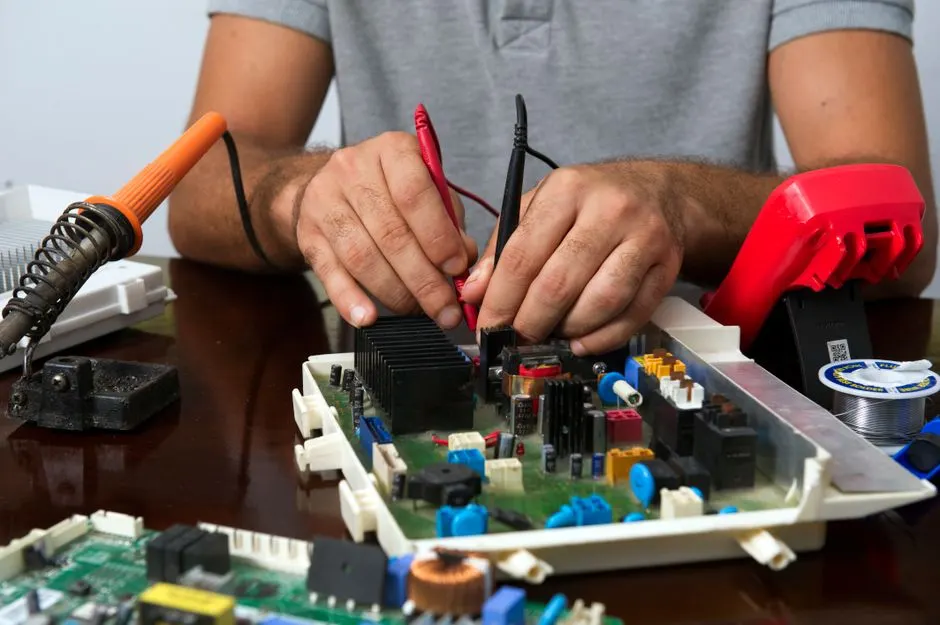
There is a clear difference between routine care and repair work. Cleaning a dispenser is routine care; replacing a pump, testing a motor circuit, or correcting a leak inside the cabinet calls for proper tools and a safe diagnosis. Florida Washer Repair can inspect the washer, explain what failed, and test its operation before we leave.
Frequently Asked Questions
When should I stop troubleshooting and call a washer technician?
Call after one round of basic checks if the washer still will not drain, trips a breaker, leaks again, smells burnt, or makes a new grinding noise. Shut off the water for an active leak and avoid another test cycle. If water is near the outlet or cord, cut power at the breaker from a dry location instead of touching the plug.
Which washer repairs are safe to do yourself?
Most homeowners can safely redistribute a load, check the control lock, confirm supply valves are open, straighten a visible kinked hose, or clean a user-accessible filter as the manual directs. Unplug the washer before cleaning a removable part, and use a pan and towels because a drain filter can release roughly a quart or more of water.
Can DIY washing machine repairs cause more damage?
Yes. A forced panel, incorrect pump, damaged wire connector, or bypassed lid switch can add $100 to several hundred dollars in parts and labor, depending on the washer. Repeatedly running a machine with a leak or grinding sound can also damage flooring, the tub, or motor. Stop when a repair goes beyond the manual's routine cleaning steps.
Is it safe to reset a washer that tripped the breaker?
One reset at the breaker is reasonable only after the washer is dry and there is no visible cord damage, burning smell, or water near the outlet. If it trips again, leave it off and call for service; do not install a higher-amp breaker or keep resetting it. Repeated trips can indicate an electrical fault that needs testing.
How long should I try DIY troubleshooting before booking service?
Give simple checks about 10 to 15 minutes, then stop if the same fault remains. Confirm the settings, load, water valves, and any user-accessible filter once. A persistent code, leak, or failure to drain is more useful to a technician than repeated resets or a second cycle that could worsen the damage.
Get help with Washer Repair in Florida
If basic checks have not solved the problem, Florida Washer Repair can diagnose the fault, explain the next step, and test the washer after service. Call +18665940052 to arrange washer repair in Florida.